Overview
- The problem
- My first-use evaluation found little product explanation before registration and weak guidance toward sharing a calendar or creating a first event.
- My contribution
- I evaluated the existing first-use flow, benchmarked onboarding, and designed revised flows, wireframes, mobile UI, and a prototype.
- The outcome
- A redesign proposal linking product explanation, sign-up, calendar purpose, sharing, and the first event.
Problem
The archive explicitly starts from my experience trying TimeTree. It identifies a missing early explanation, premature profile setup, and limited sharing or event-creation prompts. Existing and proposed flow diagrams provide the before-and-after evidence; no participant study is documented.
 Personal evaluation of the existing TimeTree entry screen. Original archive, panel 2; open at full size to inspect.
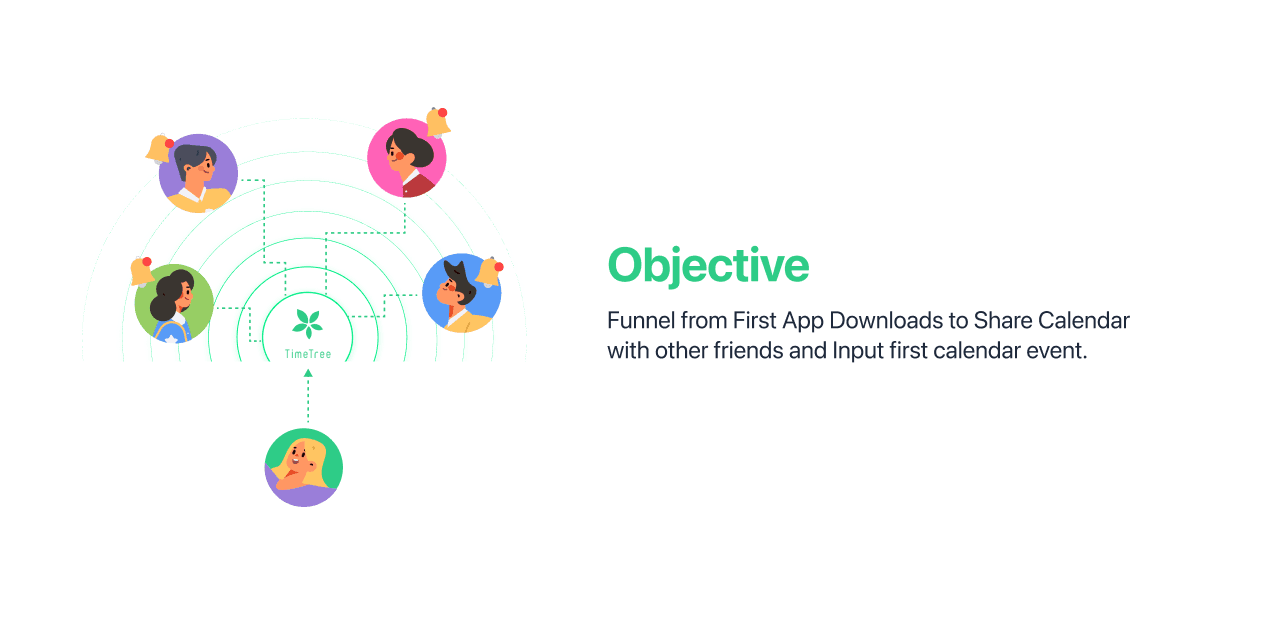 First-use sharing and event-creation objective. Original archive, panel 3; open at full size to inspect.
 Existing onboarding issues from personal evaluation. Original archive, panel 5; open at full size to inspect.
 How-might-we questions for understanding, sharing, and creation. Original archive, panel 6; open at full size to inspect.
My Role
- Company / product context
- TimeTree · Independent onboarding redesign exploration
- Users
- New users beginning a shared-calendar journey.
- My role & scope
- I evaluated the existing first-use flow, benchmarked onboarding, and designed revised flows, wireframes, mobile UI, and a prototype.
- Evidence available
- Original project narrative and design artifacts retained in this case study.
Process
Benchmark screens, the original and revised flows, and wireframes document the reasoning before high fidelity. The flow comparison shows a proposed change in sequence, not a measured reduction in drop-off.
 Evaluation-to-design process. Original archive, panel 4; open at full size to inspect.
 Onboarding benchmark references. Original archive, panel 7; open at full size to inspect.
 Existing and proposed onboarding flows. Original archive, panel 8; open at full size to inspect.
 Low-fidelity onboarding wireframes. Original archive, panel 9; open at full size to inspect.
Key Decisions
Explaining the product can improve orientation but adds steps before the calendar. The proposal moves feature explanation earlier and defers nonessential setup, while contextual guidance introduces sharing and event creation when they become useful. The optimal amount of guidance still needs testing.
Final Solution
The proposal introduces sharing, communication, and multi-calendar features before sign-up, then guides calendar purpose, invitations, and first-event creation. The original UI states, component sheet, and animated prototype remain available below.
 Product-explanation and welcome interface sequence. Original archive, panel 10; open at full size to inspect.
 Detailed mobile onboarding design. Original archive, panel 11; open at full size to inspect.
 Detailed mobile onboarding design. Original archive, panel 12; open at full size to inspect.
 Detailed mobile onboarding design. Original archive, panel 13; open at full size to inspect.
 Detailed mobile onboarding design. Original archive, panel 14; open at full size to inspect.
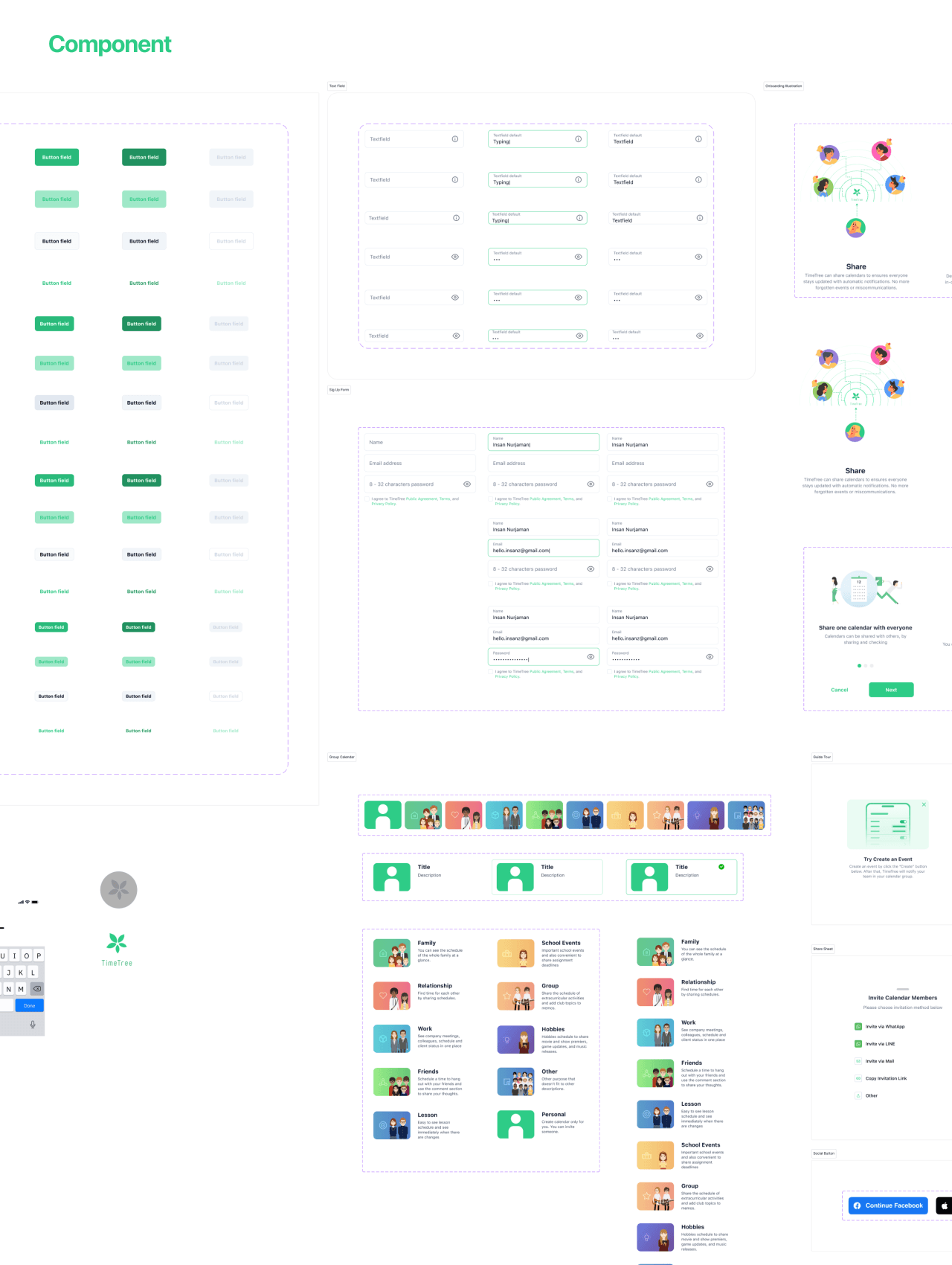 Reusable component and state sheet. Original archive, panel 15; open at full size to inspect.
 Animated onboarding prototype. Original archive, panel 16; open at full size to inspect.
Outcomes
The outcome is the onboarding redesign proposal. No implementation, activation-rate change, time-to-first-event improvement, or user-study result is established.
Evidence & limitations
This is an independent design exploration, not a commissioned TimeTree project. Personal evaluation is not presented as user research or a measured funnel result.
A personal critique can miss needs and behaviors that differ from the designer's own.
Learnings
- What worked in the design
- The proposed sequence ties onboarding to sharing and creating, rather than account setup alone.
- What I would change next
- Test an existing-flow baseline and the revised prototype with new users, including people who want a private calendar or are not ready to invite others.
 Original project closing. Original archive, panel 17; open at full size to inspect.

